
Into AI

Into AI

Let's Peek Inside The Database That You Use Everyday

Making Database Internals Easy To Grasp (+ A Look At Postgres' Internals)

Dr. Ashish Bamania's avatar
Dr. Ashish Bamania
Nov 04, 2023
∙ Paid
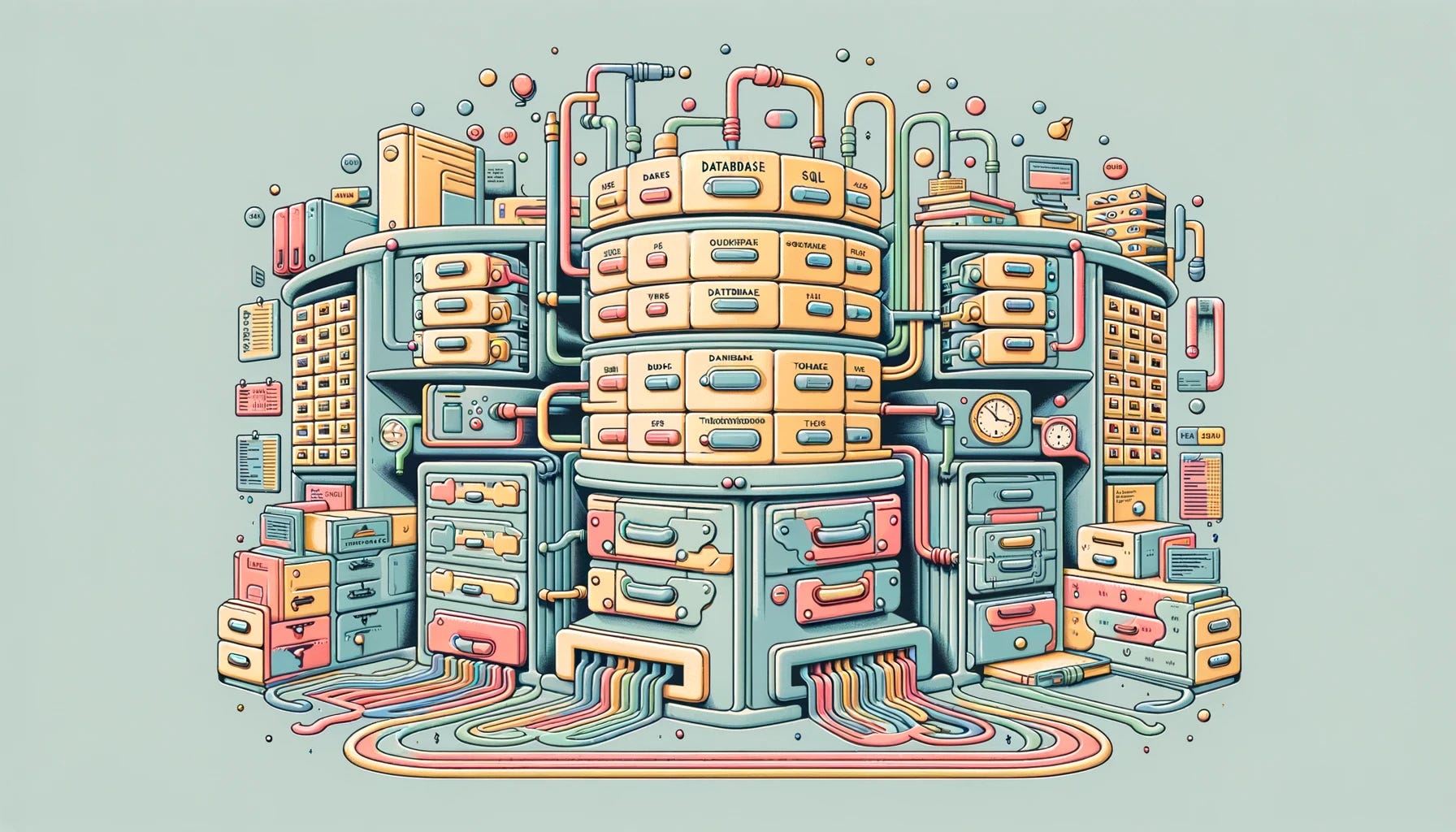
An image in the style reminiscent of Wes Anderson, visually representing the internals of an SQL database. The scene is symmetrically composed with a pastel color palette. It features a whimsical, intricate representation of a database structure with tables, rows, and columns illustrated in a charmingly stylized manner. The tables are represented as physical, vintage-style drawers or cabinets, each labeled with database terminology. Colorful data flows between these structures, symbolizing queries and transactions. The background includes subtle nods to computer programming, with retro computer parts and coding books neatly arranged, creating a balanced, aesthetically pleasing composition.
Credits: DALL-E 3

A Database management system or DBMS is usually a distributed system consisting of multiple clusters that are in turn formed by database nodes. These nodes act as database servers. 

These database nodes store the data and execute operations on it.

Most DBMSs usually follow a client-server model where application instances (like web applications, software, or other client tools) act as clients. 

These clients interact with the database nodes/servers by typically sending queries (in the form of query languages such as SQL) and receiving results.

This communication is managed by the Transport Subsystem.

User's avatar

Continue reading this post for free, courtesy of Dr. Ashish Bamania.

Or purchase a paid subscription.
© 2026 Dr. Ashish Bamania · Privacy ∙ Terms ∙ Collection notice
Start your SubstackGet the app
Substack is the home for great culture