



1. Claude Opus 5
Anthropic released Claude Opus 5, a model that comes close to the frontier intelligence of Claude Fable 5 at half the price.
Opus 5 is the new SOTA for coding and knowledge work evals and is designed to be used efficiently for everyday tasks, but it remains behind Mythos 5 on cybersecurity tasks. It also improves on Opus 4.8 across multiple benchmarks evaluating automation, computer use, scientific research, and visual output.
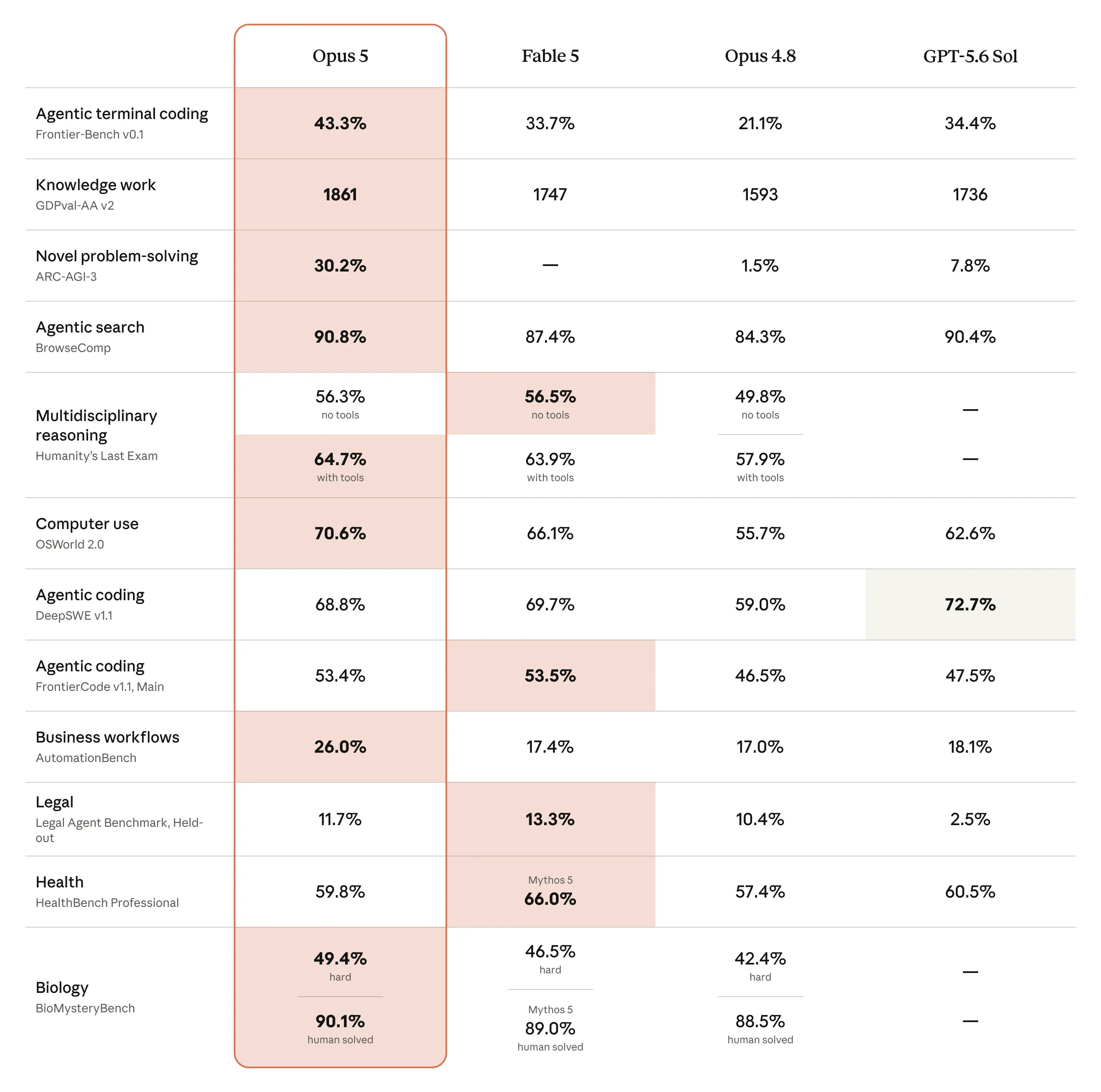
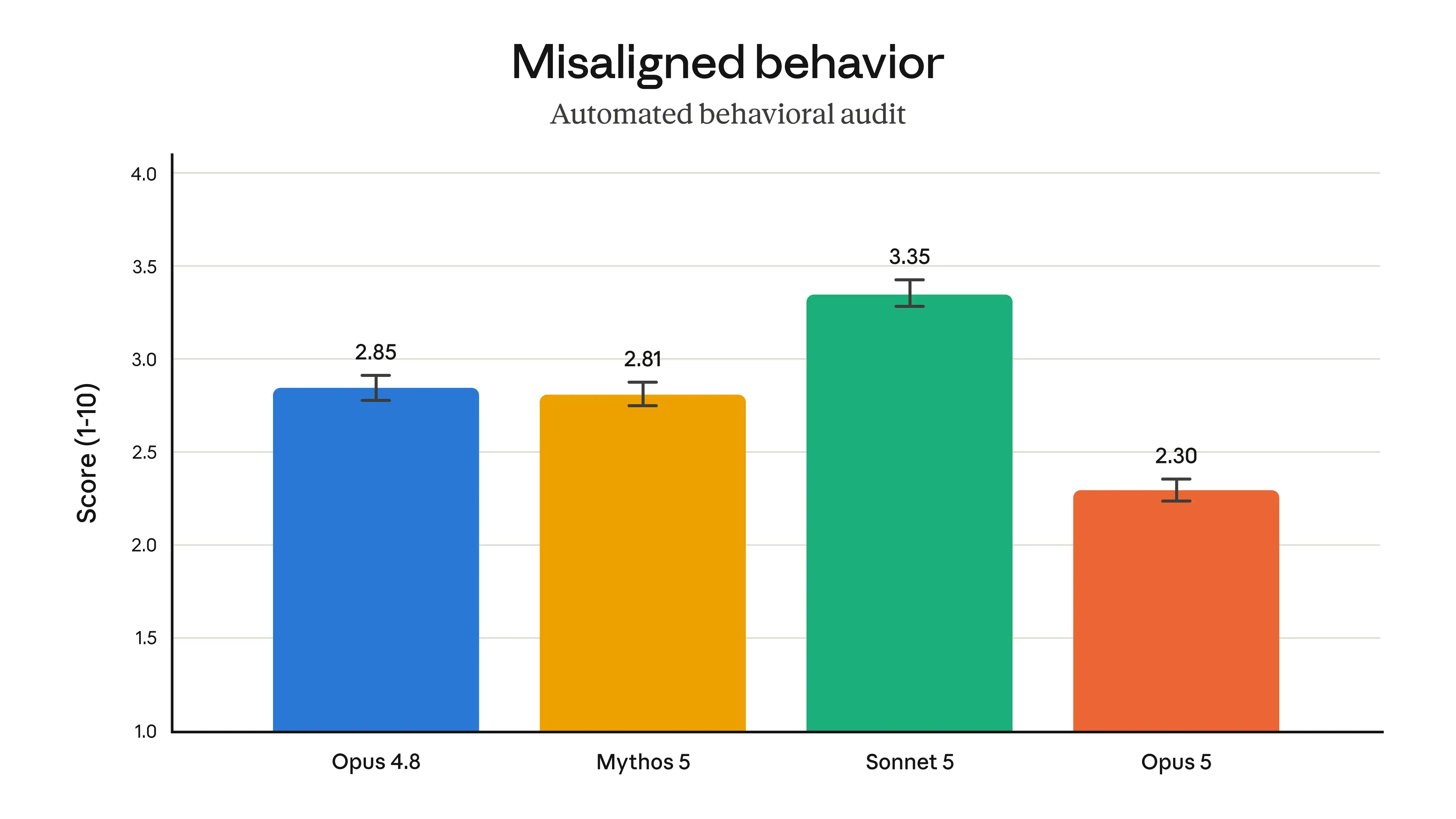
Opus 5 is described as Anthropic’s most aligned model yet and costs $5 per million input tokens and $25 per million output tokens (the same as Opus 4.8).
Read more about this release using this link.
2. Hilbert Operator for Progressive Encoding (HOPE)
This research paper introduces Hilbert Operator for Progressive Encoding (HOPE), a data-free and hyperparameter-free mathematical framework that helps deconstruct the internal knowledge stored inside deep neural networks.
While network compression is usually used to make models smaller, it can also help analyze what a model has learned. This is because removing a neuron tests whether it contributed to important knowledge, and merging neurons tells whether they perform functionally similar roles.
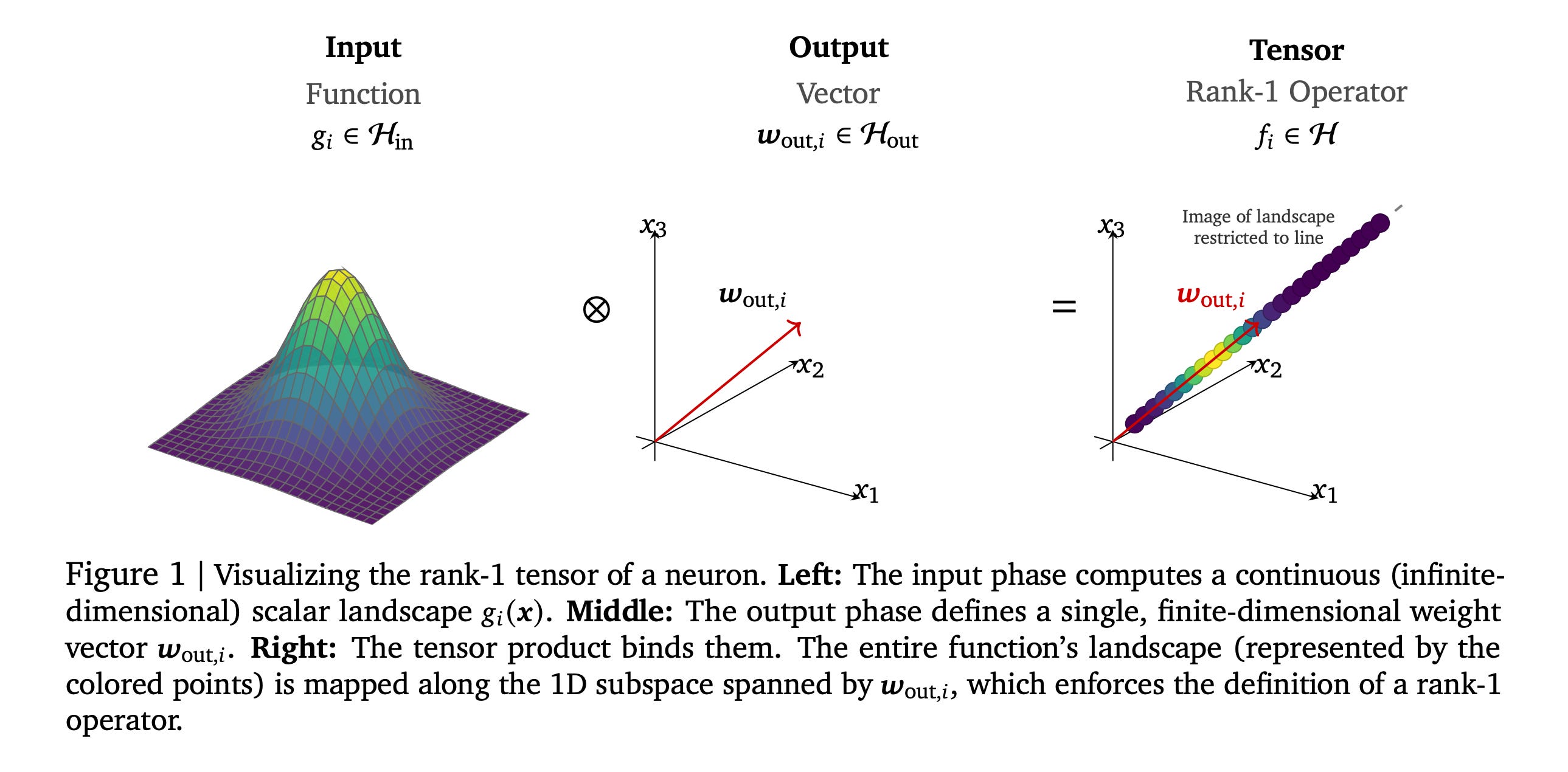
HOPE, or Hilbert Operator for Progressive Encoding, models each neuron as a rank-1 Hilbert-Schmidt operator. This allows evaluation of neurons in a Hilbert space of continuous functions and simplifies a neural network based on what each component actually does (its function) rather than relying only on the size of its weights.
With HOPE, different compression actions (pruning neurons, merging neurons, and removing residual blocks) can be treated as forms of the same low-rank projection problem and compared using a single scale-invariant metric.
Read more about this research using this link.
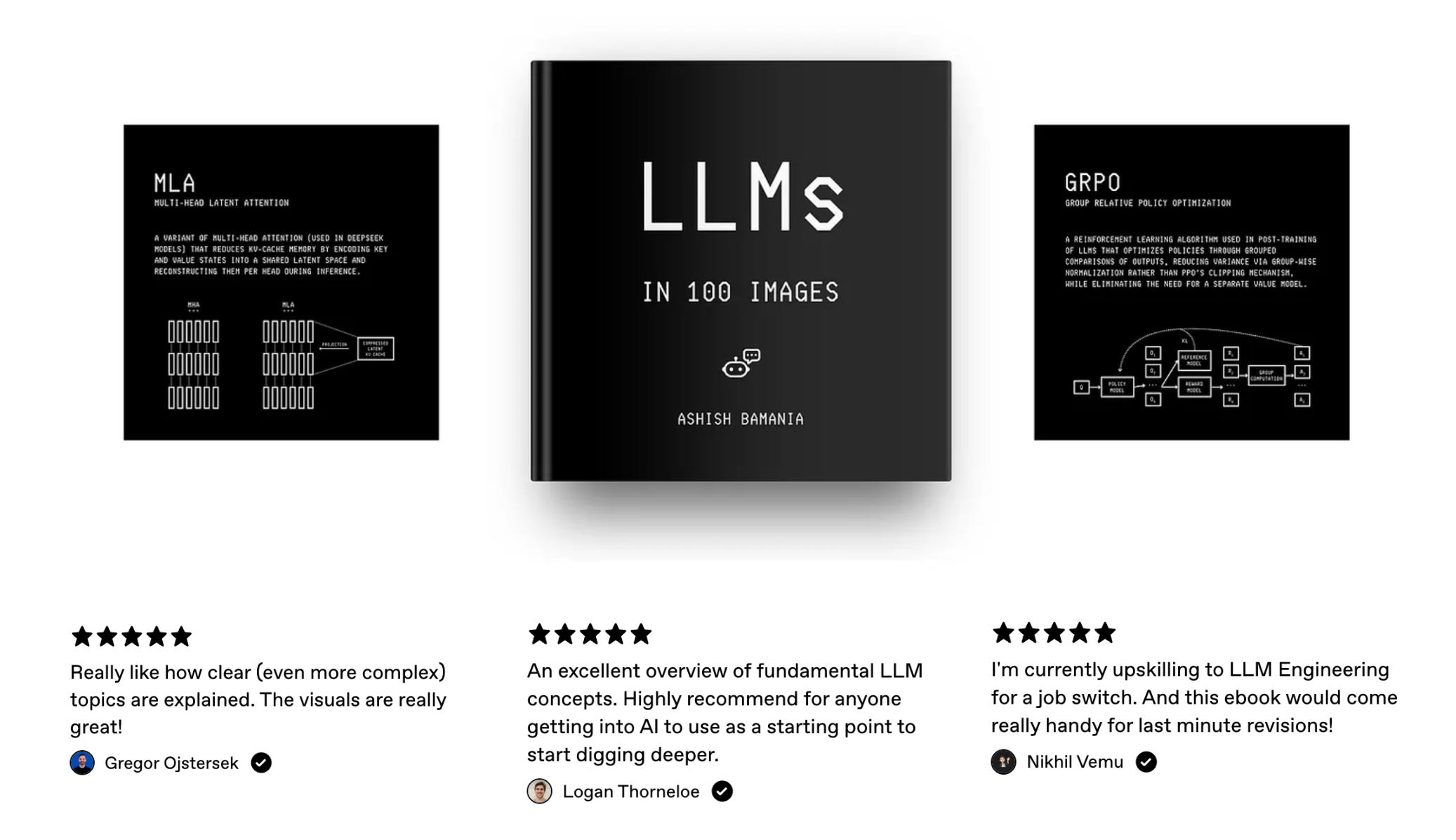
Before we move forward, I want to introduce you to my book, ‘LLMs In 100 Images’.
It is a collection of 100 easy-to-follow visuals that describe the most important concepts you need to master to understand LLMs today.
I’m offering a limited-time 30% discount, which you can claim using the button below.
3. LLMs Get Lost in Evolving User Intent
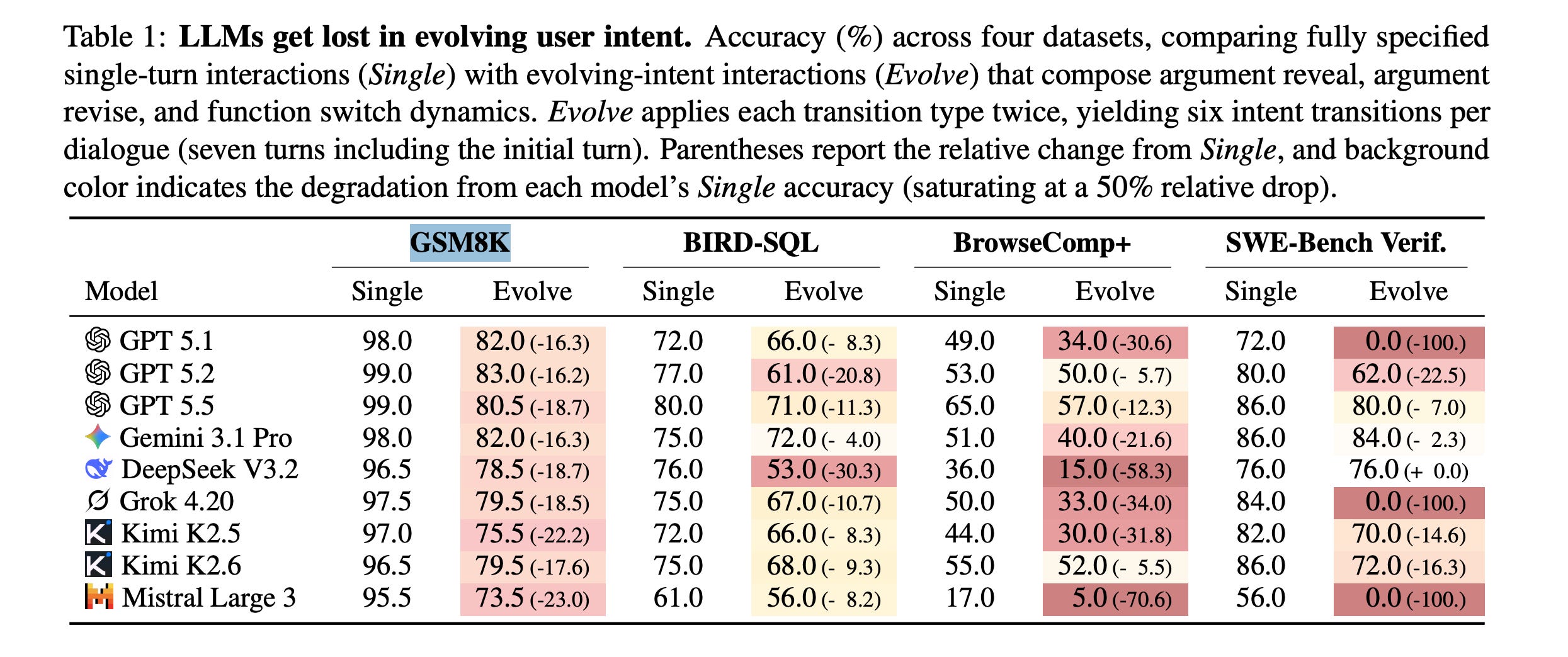
This research paper evaluates how well LLMs track and act on user intent as it evolves over the course of a conversation.
This is done using a framework that changes static, single-turn tasks into dynamic multi-turn conversations in which the user’s intent evolves across turns while preserving each task’s original evaluation method, allowing existing benchmarks to be reused as controlled test environments without requiring new annotations.
The results show that LLMs do not faithfully track and act on the user’s evolving intent, a capability that is critical for collaborative agents. For example, the performance of GPT-5.5 goes down from 99% to 80.5% on GSM8K after 6 intent changes.
Task switching is the most difficult transition for LLMs, and simple memory prompts or even restating the user’s correct current intent improve results but do not restore single-turn performance.
Read more about this research using this link.
4. Laguna S 2.1
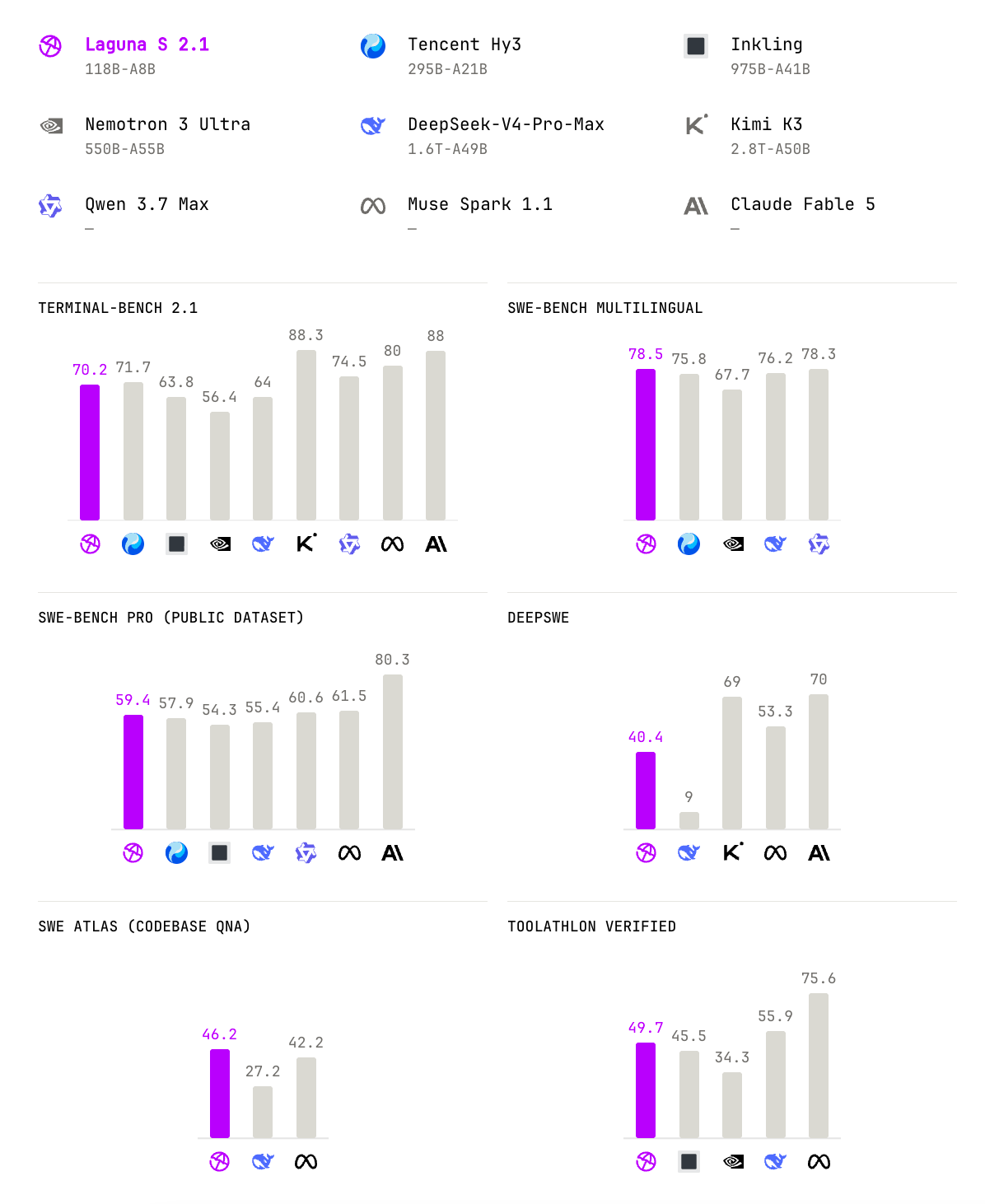
Poolside released Laguna S 2.1, an open-weight, agentic coding model. It comes with an 118B total-parameter Mixture-of-Experts (MoE) architecture with 8B activated parameters per token and supports a context window of 1M tokens.
The model’s performance is a result of strong post-training that rewards verification, backtracking, and persistence at tasks, using more generous rollout budgets, better RL sandbox infrastructure, and multi-harness rollouts (same prompts rolled out in several agent harnesses).
Laguna S 2.1 performs competitively with much larger LLMs, scoring 70.2% on Terminal-Bench 2.1 and 78.5% on SWE-Bench Multilingual. Some impressive tasks that it achieves are:
Building a basic browser engine from scratch
Improving its software harness used for training/evaluation and user interactions, making it 5.2% faster with ~70% lower memory allocation
Independently re-discovering a proof to Erdős problem #397 (the first proof to the conjecture was found earlier in January 2026 by GPT-5.2 Pro)
Read more about this release using this link.
5. Music-JEPA
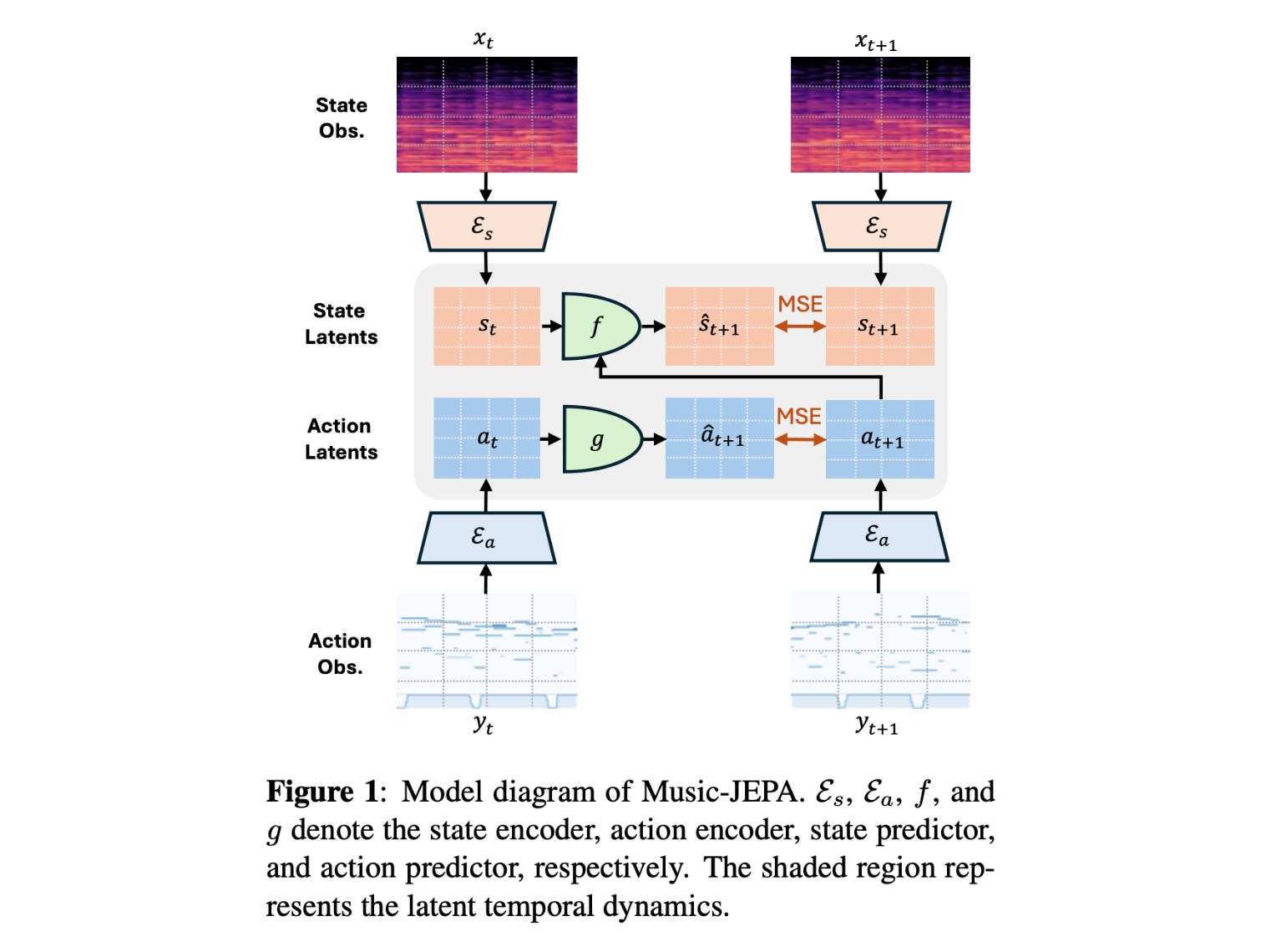
This research paper introduces Music-JEPA, a world model that learns a world model of piano sound using JEPA by framing music as an action-conditioned system where the audio is treated as the state, and the pianoroll as the instrument action.
Given a current audio state and an action, the model predicts the resulting future audio state directly in a latent space rather than reconstructing the raw sound. The model is trained in a fully offline setting on roughly 200 hours of paired piano audio and MIDI, without environment interaction.
Experiments show that the learned model captures relationships between musical actions and their resulting sound, including pitch, timing, velocity, and pedal control, and outperforms JEPA models trained on passive audio alone.
The resulting representations can be used for downstream tasks such as beat tracking, composer identification, and key estimation, and enable piano transcription by planning, i.e., working backward to identify the actions most likely to have produced a given sound.
Although impressive, Music-JEPA focuses on classical piano with aligned MIDI, and it remains unclear how well the model scales or generalizes to broader musical settings where action annotations are unavailable.
Read more about this research using this link.
6. LLM-as-a-Coach
This research paper introduces Experiential Learning (EL), a method for improving LLMs on open-ended tasks (such as creative writing and summarization), where there is no single correct answer.
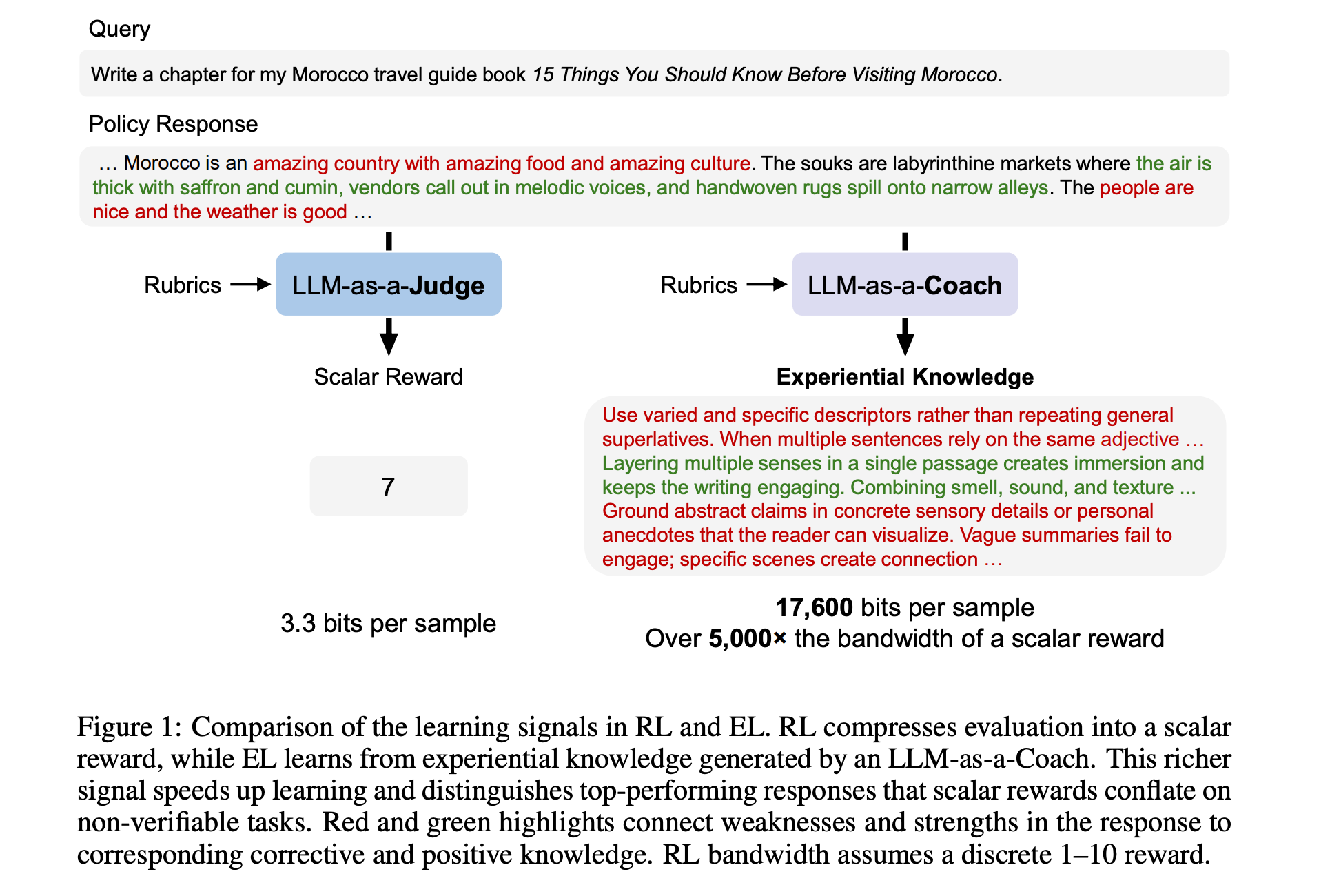
In standard RL, an LLM is used as a judge, and its detailed evaluation is reduced to a scalar reward. In EL, an LLM is used as a coach where it evaluates the model’s responses and produces detailed guidance, which is distilled into the model’s weights through a teacher model using On-policy context distillation.
LLM-as-a-Coach creates a dense supervision signal with 17,600 bits of information per sample, which is more than 5,000× the bandwidth of a scalar reward.
This approach consistently outperforms rubric-based RL on held-out and unseen open-ended tasks, generalizes better beyond the training distribution, and reduces reward hacking.
Read more about this research using this link.
7. Nanbeige 4.2
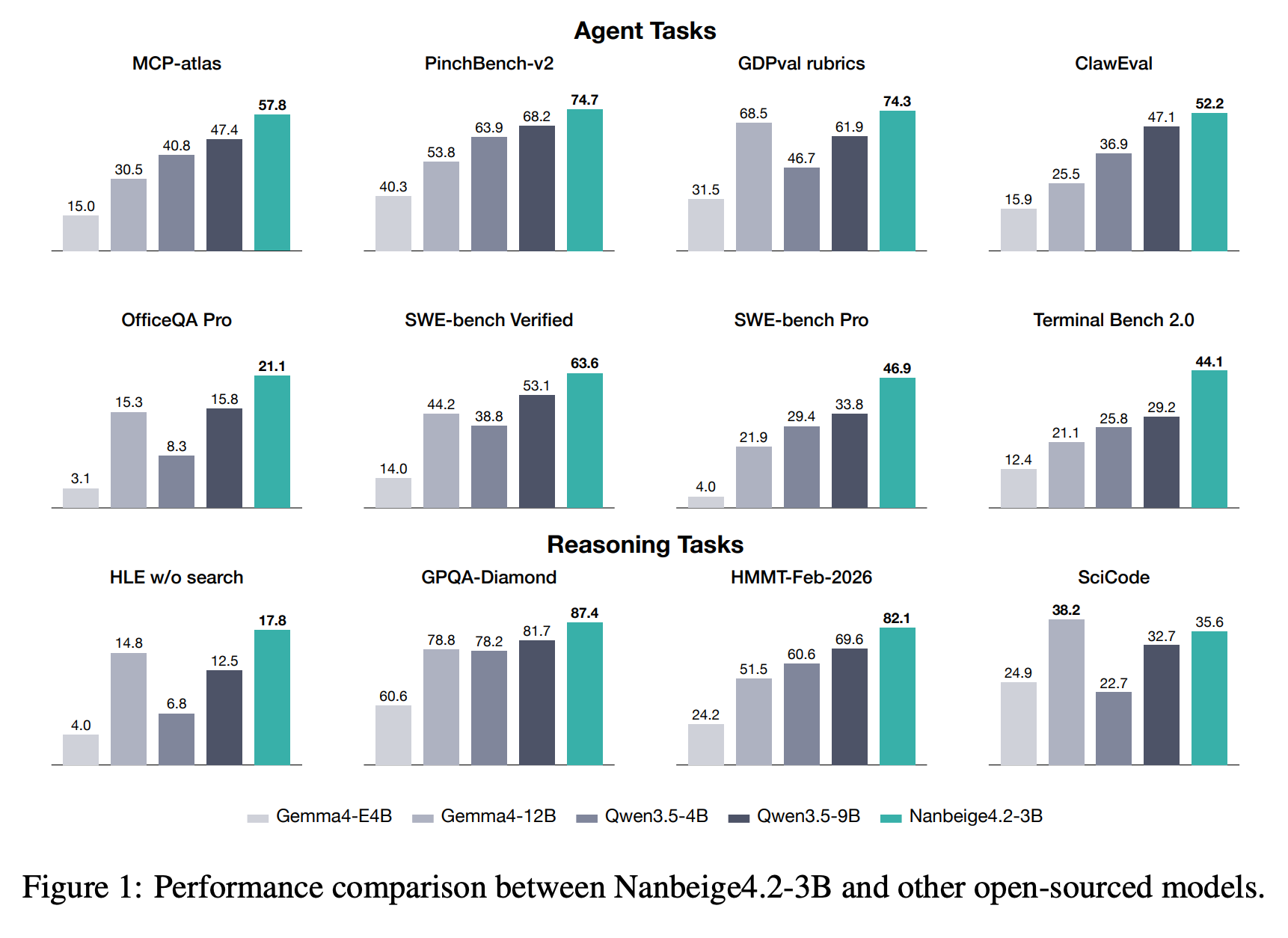
This research paper introduces Nanbeige 4.2-3B, an open-weight agentic model with strong performance in coding office tasks and complex tool-use tasks, and highly competitive reasoning capabilities in mathematics, coding, and science.
The model has only 3B non-embedding parameters and uses a Looped Transformer that sends information through the same layer stack twice to increase effective depth without adding parameters.
Nanbeige 4.2-3B was pretrained from scratch, then post-trained on execution-grounded agent trajectories and improves through multi-stage RL focused on response quality, reasoning efficiency, and stable agentic learning.
Evaluations show that it outperforms larger models such as Qwen3.5-9B and Gemma4-12B across diverse agentic benchmarks while remaining competitive on reasoning and alignment tasks.
Read more about this research using this link.
8. Loop the Loopies!
This research paper presents the Loopie series of Mixture-of-Experts (MoE) models:
Loopie-20B-A2B: 20B-parameter model with 2B active parameters
Loopie-6B-A0.6B: 6B-parameter model with 0.6B active parameters
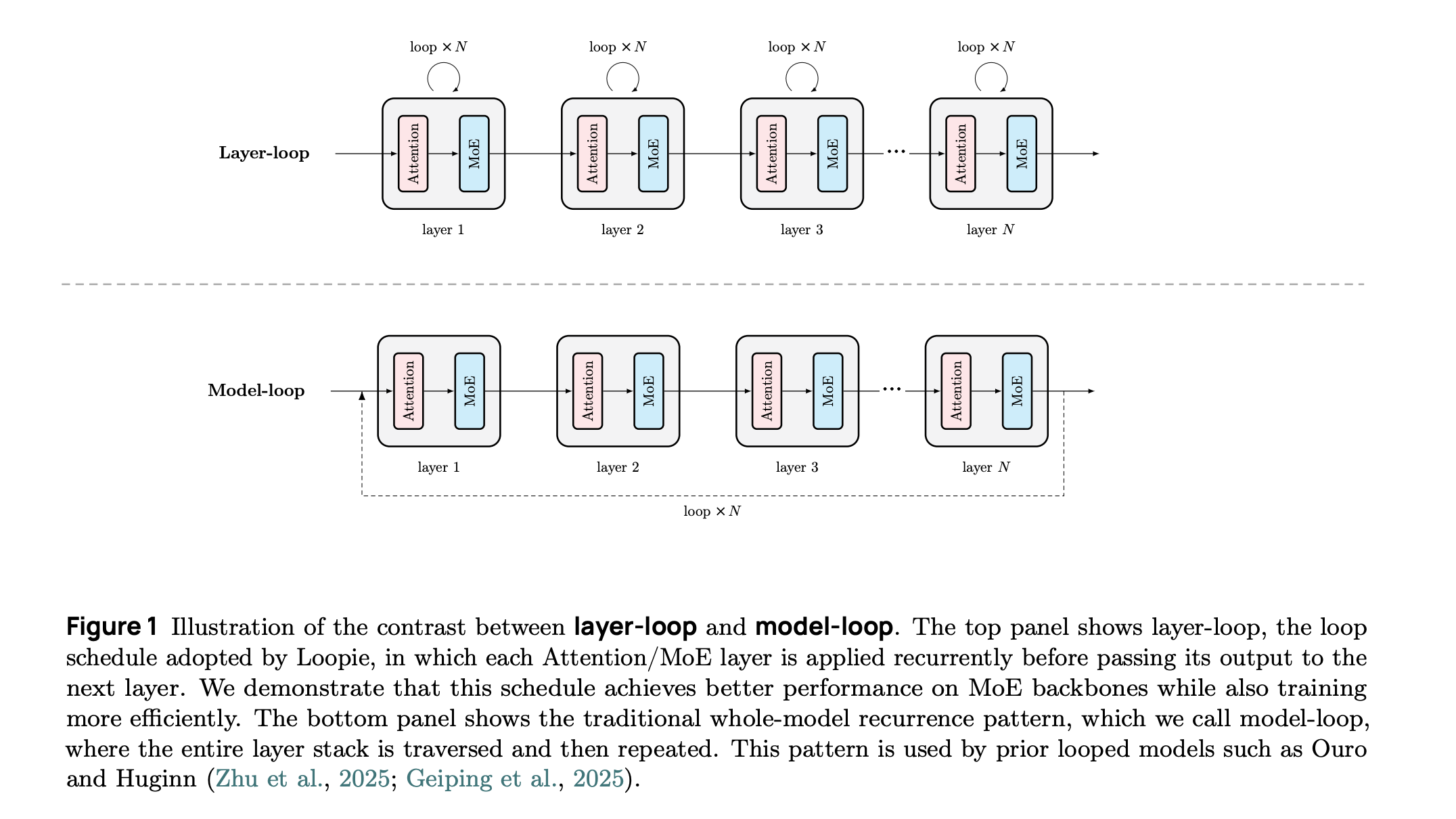
These models use Looped transformers, where each Transformer layer is reused twice before moving to the next layer.
Looped transformers previously faced the challenge that, on an N-times increase in pre-training compute, increasing the parameter count by a factor of N usually outperforms looping a model N times.
This is fixed in the “Loopie Recipe,” which reuses each Transformer layer twice before moving to the next, halving the number of stored layers while preserving effective depth. The saved memory is then used to increase training throughput (batch size and model width) under the same wall-clock budget.
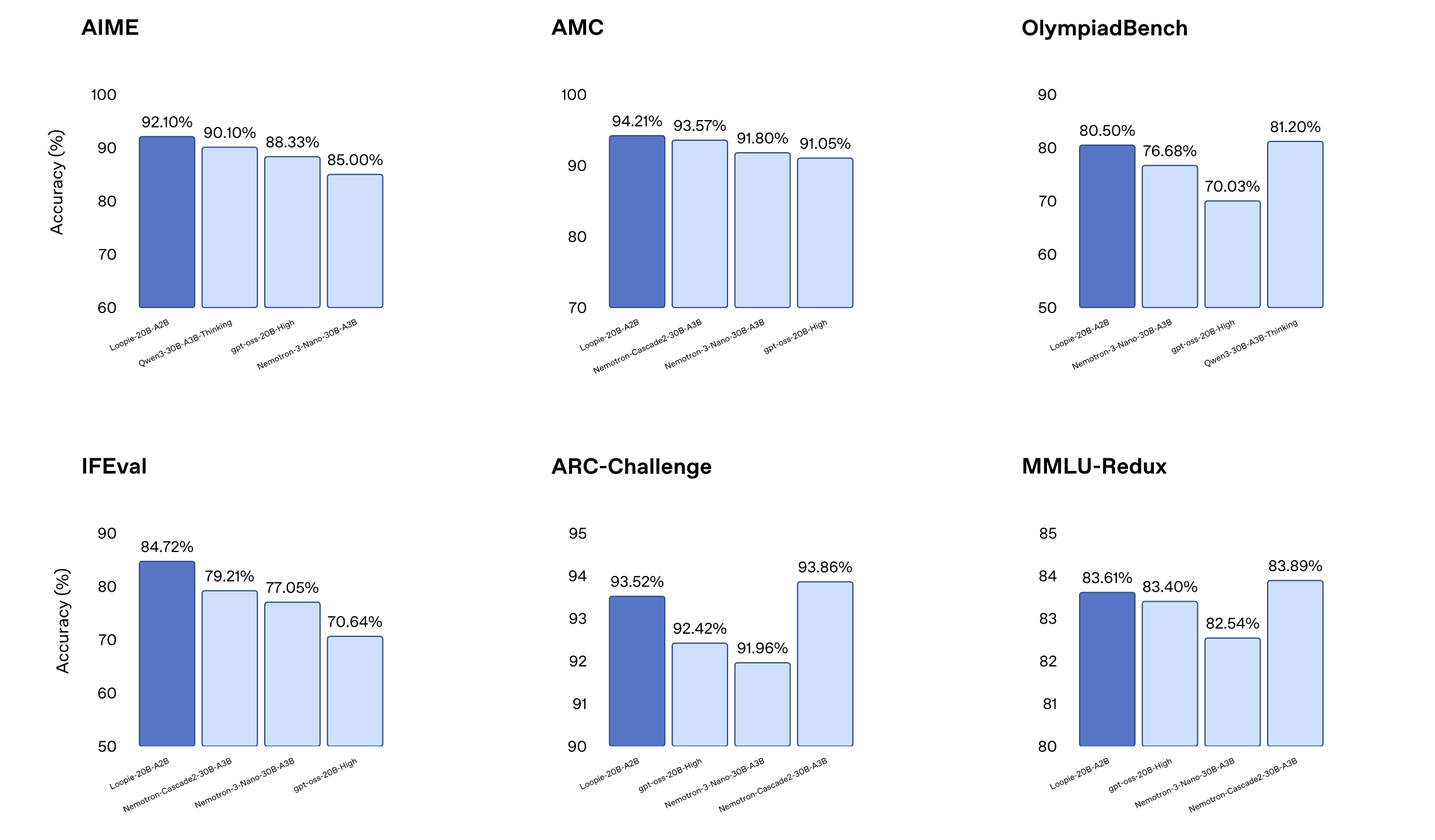
Comparisons with a vanilla 30B-A3B model show that Loopie substantially outperforms vanilla Transformer baselines trained with the same compute budget and, with a new post-training method, reaches frontier-level reasoning performance.
Read more about this research using this link.
9. Fugu-Cyber
Sakana AI released Fugu-Cyber, a cybersecurity-focused multi-agent orchestration system that behaves like a single model available as one API endpoint while dynamically assigning tasks to specialized agentic models.
This system is based on the Fugu orchestration model, which dynamically orchestrates the world's best models to solve complex, multi-step problems and reach frontier-level performance without single-vendor dependency.
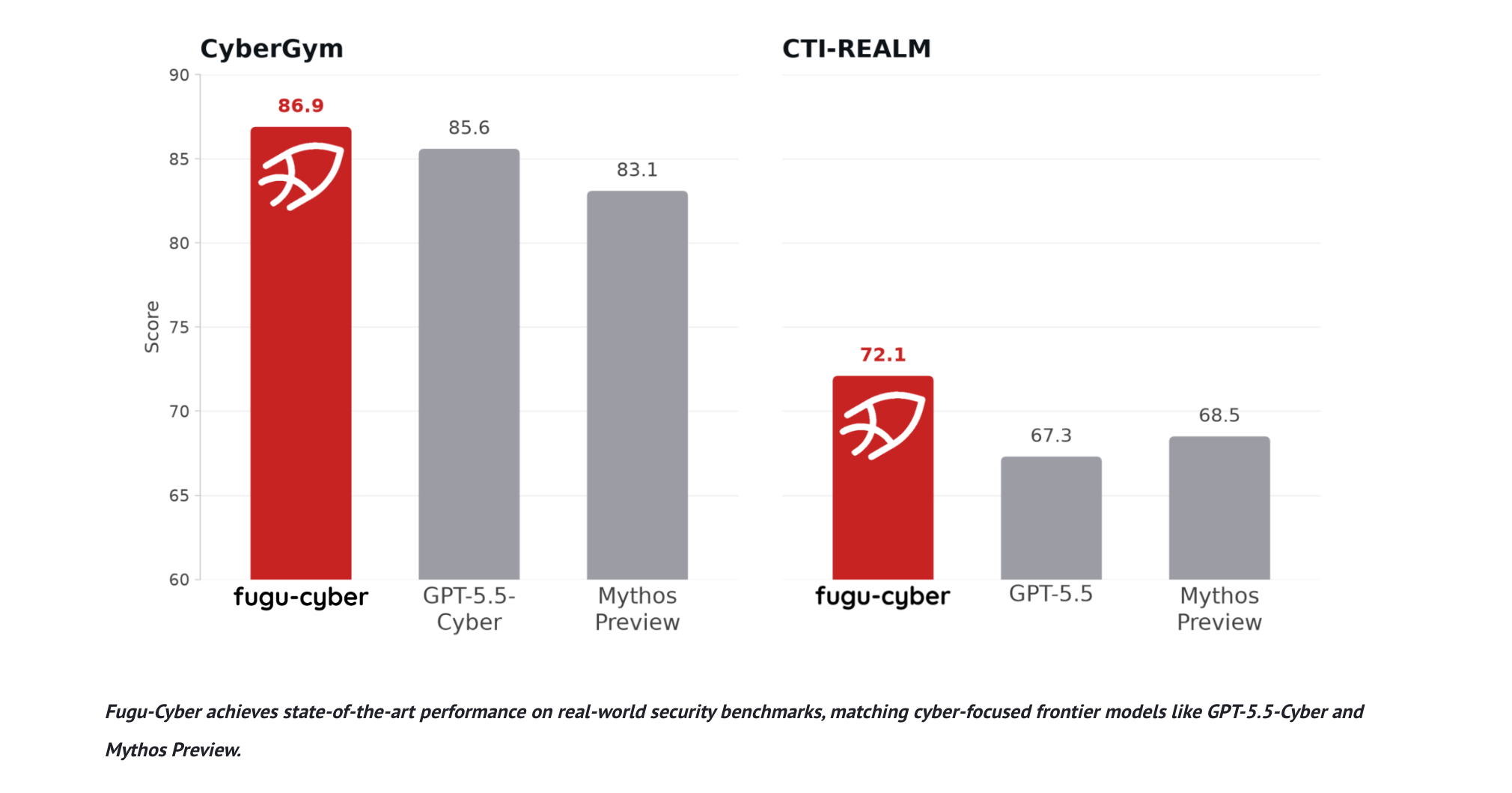
Fugu-Cyber achieves SOTA performance on the industry’s most challenging security benchmarks, reaching a success rate of 86.9% on CyberGym and 72.1% on CTI-REALM.
These results are comparable to leading cybersecurity-focused frontier models such as GPT-5.5-Cyber and Mythos-Preview.
Read more about this release using this link.
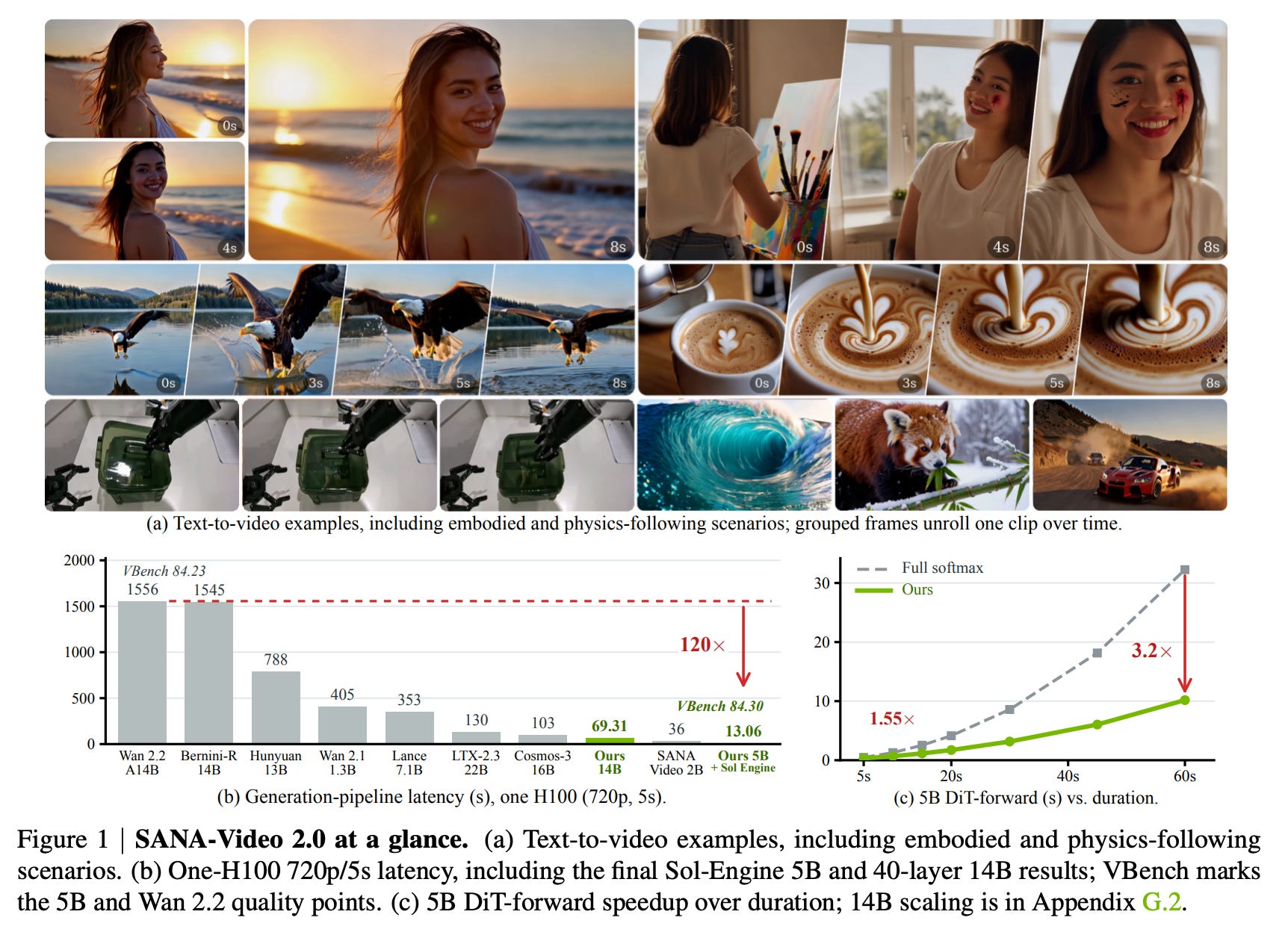
10. SANA-Video 2.0
This research paper introduces SANA-Video 2.0, a hybrid video-generation model available at 5B and 14B scales that can generate high-quality video up to 720p on a single GPU.
The model uses hybrid Linear–Softmax Attention, which combines gated linear attention with periodic gated-softmax attention layers in a 3:1 ratio.
The softmax layers restore detailed token interactions that pure linear attention lacks, and these are propagated across depth (later layers) using Block Attention Residuals (AttnRes).
Trained from scratch, the 5B model achieves a VBench score of 84.30 while generating 480p video in 13.2 seconds on a single H100, remaining competitive with far larger softmax video DiTs at a fraction of the latency.
Its compiled DiT forward pass is 3.2× faster than a matched full-softmax baseline at 720p/60s, a gap that increases with video duration.
Read more about this research using this link.
This newsletter edition is completely free to read. Show your love by liking it, restacking it, and sharing it with others! ❤️